Pro Lifting & PPE Techniques for Heavy Waste Safety
If you regularly move bulky rubbish, contaminated bags, broken furniture, or awkward loads, you already know this is not a job for guesswork. Pro Lifting & PPE Techniques for Heavy Waste Safety are the difference between a smooth clearance and a day that ends with a strained back, a cut hand, or a near miss you keep replaying in your head. Truth be told, heavy waste is rarely just "heavy" - it is uneven, sharp, dusty, slippery, and often sitting in a cramped hallway or a dark loft. That is where proper lifting habits and the right protective kit earn their keep.
This guide breaks down what professional lifting and PPE look like in real life, why they matter, who should use them, and how to put them into practice without overcomplicating things. You will also find a practical checklist, a comparison table, a real-world example, and answers to the questions people ask most often when handling heavy waste safely.
Why Pro Lifting & PPE Techniques for Heavy Waste Safety Matters
Heavy waste work looks simple from a distance. Pick it up, carry it out, load it, done. But in practice, it is one of those jobs where small mistakes stack up fast. A loose grip on a damp bin bag, a box that shifts mid-lift, a mattress dragged down a narrow stairwell, or a hidden nail in a broken cabinet - any of these can turn routine work into an injury risk.
The main issue is not just weight. It is handling complexity. Waste loads are often irregular, dirty, and unpredictable. Some items are light but bulky. Others are dense in a way that throws your balance off. And some are both, which is lovely in the worst possible way. Without the right lifting technique, the body takes the strain through the lower back, shoulders, wrists, and knees. Without PPE, your hands, eyes, feet, and lungs are more exposed to cuts, impacts, contamination, and dust.
Good lifting and PPE practice matters because heavy waste tasks are rarely done in perfect conditions. You may be working in a tight terrace house in London, a cluttered office basement, or a garden with uneven ground and awkward access. The environment changes everything. Safe technique is what keeps the job controlled when the setting is not.
There is also a wider business side to this. Fewer injuries mean fewer delays, less damage to property, and a more reliable service. Clients notice that. Teams notice it too. And to be fair, nobody wants a "quick job" that ends with a trip to urgent care and a missed afternoon.
How Pro Lifting & PPE Techniques for Heavy Waste Safety Works
At its simplest, safe heavy waste handling works by combining three things: planning, body mechanics, and protection. If one of those is missing, the whole job becomes less stable.
1. Planning before the lift
Before anything is moved, the load should be assessed. That means checking:
- weight and shape
- whether the item is balanced or likely to shift
- sharp edges, broken glass, protruding metal, or wet surfaces
- the route out of the property
- stairs, narrow doors, thresholds, and low ceilings
- where the item will be placed next
This is the part many people rush. Yet a 20-second check can prevent a 20-minute problem. If an item needs two people, a sack truck, a lift aid, or a different route, that should be decided now, not halfway through the staircase.
2. Using the body efficiently
Professional lifting technique is about control, not brute force. In practice, that means keeping the item close to the body, using the legs rather than the back, avoiding twisting under load, and moving smoothly rather than jerking. If a load feels too awkward to manage comfortably, it probably is. The body gives fairly honest feedback, even if we do not always listen.
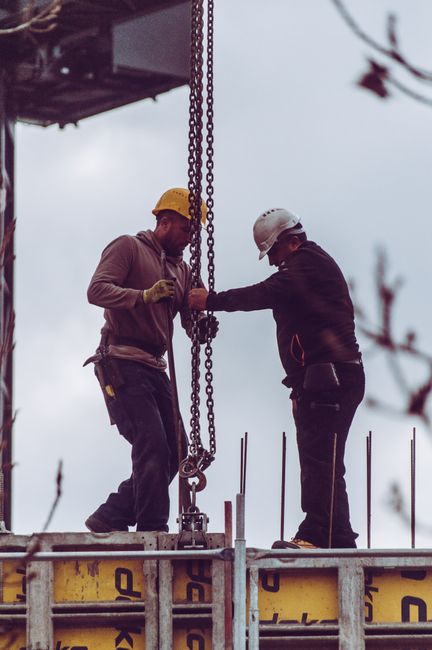
Good technique also means knowing when not to lift alone. Team lifts should be coordinated with a clear count and one person leading the move. If two people lift at different speeds, the object becomes unpredictable. That is when drops, slips, and collisions happen.
3. Wearing PPE that fits the task
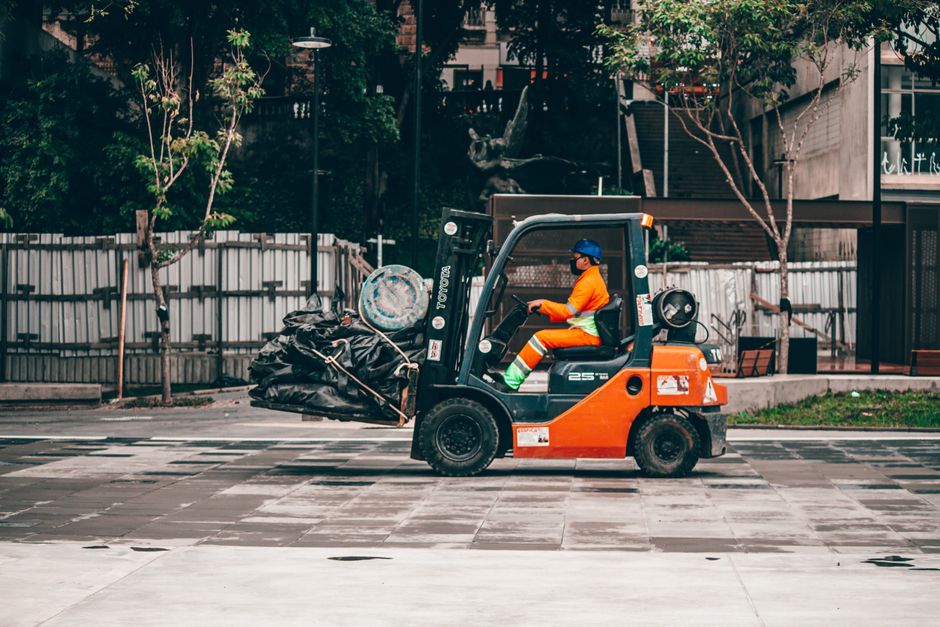
PPE is not just there for compliance. It is there to reduce harm when the unexpected happens. For heavy waste handling, the most common items are:
- Gloves for grip, abrasion resistance, and cut protection
- Safety boots with toe protection and slip resistance
- High-visibility clothing where vehicles, loading areas, or low light are involved
- Eye protection when dust, fragments, or splash risk exists
- Dust masks or respirators where fine particles, mould, or irritation are likely
- Coveralls or long sleeves for dirty or contaminated waste
The point is not to wear every item all the time. The point is to match protection to the risk. That is the professional bit people sometimes skip.
4. Keeping the load and route under control
Once the item is moved, the next stage matters just as much: carrying it safely through the route. This includes clearing trip hazards, opening doors in advance where possible, and avoiding tight turns with items that can swing. If the path becomes unsafe, stop and reset. A reset is not failure. It is good judgement.
Key Benefits and Practical Advantages
When done properly, pro lifting and PPE techniques offer benefits that are both immediate and long-term. Some are obvious. Others only become obvious when something goes wrong and you realise how much worse it could have been.
- Lower injury risk for backs, hands, feet, shoulders, and eyes
- Better control over awkward or unstable waste
- Less property damage when items are moved through homes or workplaces
- Faster jobs because the team spends less time recovering from mistakes
- Improved confidence for staff handling difficult clearances
- Stronger customer trust because the work looks organised and careful
- Cleaner outcomes when dust, debris, and contamination are managed properly
There is also a subtle but important advantage: better judgement. Once a team gets used to proper lifting and PPE, they start spotting risk earlier. That means better decisions about loading, sequencing, and whether a piece should be taken apart before moving. In our experience, that habit saves more time than it costs.
Expert summary: Safe heavy waste handling is not about being tough enough to lift more. It is about making the safest move the easiest move. That usually means planning the route, using the right kit, and never letting speed outrun control.
Who This Is For and When It Makes Sense
This approach is relevant to anyone moving bulky, awkward, dirty, or potentially hazardous waste. That includes a lot more people than you might expect.
Common users
- house clearance teams
- builders and site workers clearing rubble or mixed waste
- office clearance crews moving furniture, printers, and storage units
- landlords and property managers dealing with end-of-tenancy clearances
- garden clearance teams handling soil bags, branches, and broken items
- people dealing with probate or hoarder clearances
- facilities staff managing bulky waste in commercial buildings
When it makes sense to use a structured lifting and PPE approach
- when waste is heavy, sharp, wet, dusty, or contaminated
- when stairs, tight corridors, or uneven outdoor routes are involved
- when the load is too bulky to grip properly
- when more than one item is being moved repeatedly in a shift
- when the job mixes waste types, such as furniture, appliances, and general rubbish
- when the property has limited access or poor lighting
For a small one-off bag, a full team setup may be unnecessary. But once you start moving repeated loads or awkward items, the risk changes quickly. That is the moment to switch from "just get it done" to "let's do this properly."
If you are handling domestic waste as part of a broader property job, it may help to look at related services such as house clearance, rubbish removal, or large item collection for the kind of work where lifting control really matters.
Step-by-Step Guidance
Here is a practical way to manage heavy waste safely without overcomplicating the job.
Step 1: Inspect the item and the route
Look at the object, not just the weight. Ask yourself: Is it stable? Can I get a clear grip? Does it have glass, nails, splinters, or wet patches? Then check the route out. Doorways, stairs, sloping paths, and parked vehicles can all change how the item should be moved.
Step 2: Select the right PPE
Choose PPE based on the actual risk. Gloves should allow enough dexterity to grip, not just cover the hands. Boots should have firm soles and toe protection. If there is a chance of dust or fibres, use suitable respiratory protection. If debris may flick up, add eye protection. Simple enough, but people still get this wrong by grabbing the nearest gloves and hoping for the best.
Step 3: Prepare the workspace
Move obstacles out of the route. Open doors if you can. Switch on lighting in stairwells or lofts. If a bag is leaking, place it into a stronger sack or container before moving it. A clean route reduces slips, and slips are where a lot of the trouble starts.
Step 4: Test the lift
Before carrying the item fully, do a small test lift. This tells you whether the load is balanced, whether the grip is secure, and whether the item will twist when raised. If it feels unstable in the first second, do not force it. Reassess and adjust the plan.
Step 5: Lift with stable posture
Stand close to the item. Keep feet apart for balance. Bend at the knees where practical. Tighten your core slightly, lift smoothly, and keep the load near your body. Avoid twisting while carrying; turn with your feet instead. That bit sounds obvious, but under pressure people do all sorts of odd things.
Step 6: Use team lifting properly
For heavy or awkward waste, team lifting is often the safest option. One person should lead the count and give direction. Agree the path before the lift begins. If one person loses grip or needs to pause, stop together. No heroics. Nobody gets extra points for pretending they are fine when they are not.
Step 7: Set the item down carefully
Lower the item in a controlled way. Do not drop it unless the situation is unsafe and an emergency release is necessary. Place the item securely so it will not roll, fall, or snag the next person carrying something else.
Step 8: Check hands, clothing, and footwear after the task
After handling heavy waste, check for cuts, punctures, dust contamination, or damaged PPE. It is a small habit, but it catches problems early. A torn glove or cracked boot sole is a warning sign, not something to shrug off.
Expert Tips for Better Results
Some safety improvements are big and obvious. Others are tiny and make the whole process feel easier. These are the practical ones that tend to matter most on real jobs.
- Break loads down where possible. A single oversized load is often worse than two smaller, safer moves.
- Use mechanical aids early. Trolleys, sack trucks, dolleys, and lifting straps can save a lot of strain if used correctly.
- Keep gloves task-specific. Thin gloves may improve grip, while heavier gloves may be better for rough scrap. Choose with intention.
- Watch for wet surfaces. Rain, spilled liquids, and damp bins all change grip and footing.
- Think about extraction first. The challenge is often getting the item out of the building, not picking it up.
- Do not lift and twist. If you need to change direction, step round. Your back will thank you later.
- Use a "stop and reset" culture. If a route changes, someone rushes, or the load feels wrong, pause. Reset. Carry on.
A small real-world example: in a narrow Victorian hallway, even a straightforward armchair can become a wrestling match if you try to force it through in one motion. Rotate it, check the corners, and move it inch by inch. Less drama. Fewer scuffs on the walls too.
And yes, the tiny things count. A clear floor, a better grip, and a slower first lift can make the whole job feel strangely calm. Strange, but true.
Common Mistakes to Avoid
Most heavy waste injuries do not come from one dramatic mistake. They come from a string of smaller ones. The kind that feel harmless in the moment.
1. Underestimating awkward items
A bulky sofa, a smashed wardrobe, or a mattress can be harder to manage than something technically heavier. Shape changes everything. Weight is only one part of the story.
2. Wearing the wrong footwear
Trainers may feel comfortable, but they are not ideal when heavy rubbish, broken parts, or wet surfaces are involved. Foot protection and grip matter more than comfort for ten minutes.
3. Treating PPE as optional because the job is "quick"
That is one of the most common habits, and one of the most expensive when it goes wrong. Quick jobs still involve hands, feet, and faces. Unfortunately, gravity does not care about the schedule.
4. Twisting during the carry
People often rotate their torso while carrying because it feels faster. It is not. Turn your feet instead and keep the load stable.
5. Failing to inspect waste for hazards
Broken glass, syringes, nails, mouldy materials, and chemical containers can all appear in waste streams. If something looks wrong, stop and isolate it.
6. Skipping communication on team lifts
If two people are lifting without a clear count or route, someone is going to react late. That is how items get dropped or corners get clipped.
7. Rushing stairs and thresholds
Stairwells and door thresholds are where loads snag, feet slip, and balance shifts. Slow down there. Seriously.
Tools, Resources and Recommendations
The right tools do not remove all risk, but they make safe handling much more achievable. The best setups are usually simple, durable, and suited to the waste being moved.
| Tool or Item | Best for | Why it helps | Things to watch |
|---|---|---|---|
| Cut-resistant gloves | Sharp or rough waste | Improves hand protection and grip | Choose a size that still allows dexterity |
| Safety boots | Heavy loads and uneven ground | Protects toes and improves footing | Make sure soles are not worn smooth |
| Sack truck / dolly | Boxes, bags, and medium-heavy items | Reduces manual carrying distance | Not suitable for every staircase or surface |
| Lifting straps | Bulky but manageable items | Can improve leverage and posture | Needs training and coordination |
| Dust mask or respirator | Dusty, mouldy, or irritating waste | Reduces inhalation exposure | Must be suitable for the hazard |
| Eye protection | Fragment or splash risk | Protects from debris and particles | Should fit comfortably with other PPE |
Where waste is mixed or unpredictable, services such as waste removal, bulk waste collection, and furniture removal and collection are often the most relevant operational comparisons because they involve the same practical lifting decisions.
It is also worth keeping a simple inspection routine for PPE itself. Check straps, soles, seams, and fastenings before work starts. A damaged glove or loose boot grip is not just "a bit worn," it is part of the risk picture.
Law, Compliance, Standards, or Best Practice
Safety duties around waste handling are usually shaped by general workplace health and safety expectations, risk assessment practices, and the need to select suitable PPE for the task. In the UK, employers and contractors are generally expected to assess hazards, provide appropriate protective equipment where required, and train workers to use it properly. Exact responsibilities vary depending on the work, the site, and the type of waste involved.
For practical purposes, best practice usually means:
- carrying out a task-specific risk assessment
- using PPE that is appropriate for the hazard, not just available
- training staff in lifting technique and team communication
- keeping access routes safe and clear where possible
- checking for contamination, sharps, or hazardous items before handling
- recording incidents and updating procedures when something goes wrong
If a waste load may contain hazardous materials, contaminated items, or sharps, the work should be treated more cautiously. That is not the moment for improvisation. It is the moment to slow down, isolate the risk, and use the correct controls.
For companies that want a broader view of their operational expectations, internal documents such as a health and safety policy, insurance and safety information, and recycling and sustainability pages often help explain how waste handling fits into the bigger picture. Not glamorous, maybe, but useful.
Options, Methods, or Comparison Table
Not every waste move needs the same method. The safest choice depends on size, shape, distance, access, and the type of item. Here is a straightforward comparison.
| Method | Best Use | Pros | Limitations |
|---|---|---|---|
| Manual carry | Small to moderate loads with clear access | Simple, quick, no extra equipment needed | Higher strain, less suitable for awkward items |
| Team lift | Heavy or bulky items | Shares load, improves control | Needs coordination and communication |
| Sack truck / trolley | Boxes, bags, and stable items | Reduces carrying distance and strain | Can be awkward on stairs or uneven ground |
| Lifting straps / aids | Large awkward items | Can improve posture and leverage | Requires familiarity and correct use |
| Disassembly first | Large furniture and fixtures | Makes movement safer and easier | Slower upfront, needs tools and time |
In many real jobs, the best answer is a mix. For example, a wardrobe may be safer if dismantled, then moved in sections, then carried out with gloves and boots by two people. That beats trying to force a whole thing through a narrow stairwell and hoping the walls stay intact.
Case Study or Real-World Example
A typical job might involve clearing a first-floor flat after a long-term tenancy. The waste includes a broken bed frame, several heavy bin bags, a disassembled wardrobe, and an old sofa. The hallway is tight, the stairwell is narrow, and the front entrance opens onto a busy street. Classic awkward job, really.
The crew starts by identifying sharp edges on the bed frame and checking for loose screws. They put on cut-resistant gloves, safety boots, and hi-vis because the load will pass near the pavement. Before lifting, they clear the hallway and decide that the sofa is too bulky to carry as one piece. It is broken down where possible and moved in sections. The bags are tested for weight before the full carry. One bag is heavier than expected, so it is split rather than forcing a solo lift.
The result is slower at the start, but the job stays controlled. No wall scuffs. No dropped corner. No "we'll just drag it a bit" moment, which is usually where the trouble starts. The main lesson is simple: the safest plan is often the one that feels slightly more deliberate than you first wanted. That is fine. Deliberate is good.
Practical Checklist
Use this quick checklist before handling heavy waste on site.
- Have I checked the item for weight, shape, sharp edges, or contamination?
- Is the route clear, lit, and free from obvious trip hazards?
- Do I have the right PPE for the task?
- Are my gloves, boots, and eye protection in good condition?
- Do I need a second person or a mechanical aid?
- Have I planned how I will turn corners, stairs, and doorways?
- Can the item be split down, emptied, or dismantled first?
- Have I tested the lift before carrying it fully?
- Do I know where the load will be set down?
- Have I checked for leaks, dust, or hidden hazards after the move?
Quick takeaway: If the lift feels rushed, awkward, or unstable, it probably needs a better plan. That is not hesitation. That is good judgement.
Conclusion
Pro lifting and PPE techniques are not about making heavy waste work feel official for the sake of it. They are about keeping people safe, keeping jobs moving, and reducing the small mistakes that become expensive very quickly. Whether you are clearing a home, handling commercial waste, or moving bulky items through a tricky property, the principles are the same: assess first, protect properly, lift with control, and never let speed outrun safety.
If you remember only one thing, make it this: the safest waste move is usually the one that was thought through before anyone bent down to lift it.
Get a free quote today and see how much you can save.
And if you are planning a larger clearance, it helps to work with a team that already understands the awkward bits, the tight corners, and the little practical details that keep everything steady. That is often where the real difference shows up.
Frequently Asked Questions
What does Pro Lifting & PPE Techniques for Heavy Waste Safety actually mean?
It means using safe manual handling methods and suitable protective equipment when moving heavy, bulky, sharp, dirty, or otherwise risky waste. The goal is to reduce injury, improve control, and keep the job manageable.
What PPE should I wear for heavy waste handling?
At minimum, many jobs call for protective gloves and safety boots. Depending on the waste, you may also need eye protection, hi-vis clothing, dust masks, or coveralls. The right set depends on the actual hazards, not a one-size-fits-all rule.
Is it better to lift heavy waste alone or with two people?
If the item is awkward, heavy, or unstable, a two-person lift is often safer. Team lifting improves control, but only if both people communicate clearly and move together. Poorly coordinated team lifts can be just as risky as solo lifts.
How do I know if an item is too heavy to lift manually?
If it feels unstable, too bulky to grip well, or likely to twist while carrying, it may be too awkward for a manual lift. Also consider the route, not just the object. Stairs, tight corners, and poor lighting can make a moderate load much harder.
Why is lifting technique so important for waste removal?
Because waste is often irregular and unpredictable. Good lifting technique helps protect your back, shoulders, and knees while giving you better control over the load. It also reduces the chance of dropping items or damaging property.
What are the most common injuries in heavy waste work?
Common issues include strains, sprains, cuts, bruises, toe injuries, and slips or trips while carrying loads. Dust and contamination can also be problems if waste is not assessed properly before handling.
Can I use a trolley or sack truck for all heavy items?
No. Mechanical aids are useful, but they are not perfect for every situation. Stairs, rough ground, narrow hallways, and unstable items may make a trolley less suitable. The tool should fit the route and the load.
What should I do if I find broken glass, nails, or sharps in waste?
Stop handling the item if it is unsafe. Use appropriate PPE, isolate the hazard where possible, and follow a proper disposal process. Do not keep lifting and hope for the best. That is how cuts happen.
How often should PPE be checked?
Ideally before each use. Check gloves for tears, boots for worn soles or damage, and any eye or respiratory protection for fit and condition. Damaged PPE should be replaced promptly.
Do UK workplaces need a risk assessment for heavy waste handling?
In general, yes, a task-specific risk assessment is expected where manual handling risks are present. The exact approach depends on the work, but safe systems usually require assessing the load, route, hazards, and control measures before starting.
What is the best way to move waste through narrow stairs or doorways?
Plan the route first, reduce the size of the load if possible, use a second person where needed, and move slowly with clear communication. Sometimes the safest option is to dismantle the item before moving it. Forced movement through tight spaces is where mistakes creep in.
Where do professional waste teams usually get the biggest safety gains?
The biggest gains usually come from planning, good PPE, and choosing the right method for the item. Those three things save more trouble than trying to power through a hard lift. Not glamorous, but very effective.