House Clearance Experts: Recycling and Sustainability Commitment
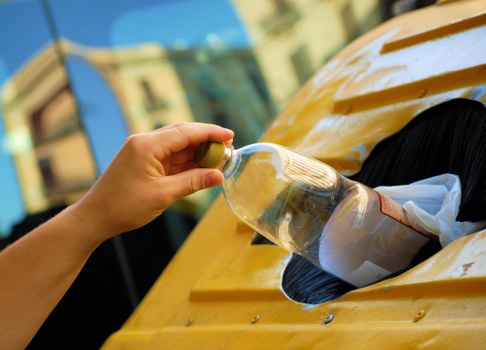 House Clearance Experts take sustainability seriously. As a leading name in house clearance and property clearance, our approach is built around measurable targets and practical action. We have set an ambitious recycling percentage target of 90% reuse and recycling from household clearances within the next three years, with an interim goal of 80% this year. That target applies to all our house clearance services and home clearance operations, ensuring that the majority of items removed from properties are diverted from landfill and given a second life wherever possible. Reducing carbon and waste is central to every clearance we undertake.
Our teams work closely with local boroughs to align clearance practices with municipal waste-sorting schemes. Many boroughs now operate multi-stream separation systems—paper and card in one bin, mixed plastics and tins in another, separate glass and food/organic collections—so our property clearance experts will pre-sort on-site to match those local rules. Adapting to borough-level separation improves recycling rates and reduces contamination in municipal streams, making recovery more efficient for councils and transfer stations alike.
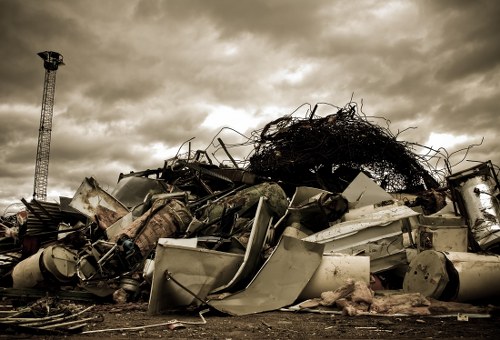 Partnerships with charities are fundamental to how we operate. We have established formal links with furniture reuse charities, community shelters, and specialist recyclers for electronics and textiles so that usable items are offered for reuse before any recycling step. Our charity partners include local community groups and national not-for-profits that accept furniture, small household goods, and working appliances. Typical donation streams include:
- Furniture & furnishings — refurbished and passed to local families or sold in charity shops;
- Working electricals — PAT-tested and gifted to community centres or routed to specialist e-waste recyclers;
- Clothing and textiles — sorted and offered to clothing banks or textile recyclers.
Local Transfer Stations and Responsible Disposal
We maintain strong operational links with several local transfer stations and civic recycling centres — for example, the Northside Transfer Station, Riverbank Transfer Station and South Borough Recycling Centre are regular destinations for materials that cannot be reused. These transfer stations act as central hubs where materials are sorted, bulked up, and forwarded to specialist processors for wood, metal, glass and hazardous streams. By routing materials to approved facilities we ensure that each material type follows its optimal path for recovery rather than being sent to general landfill.
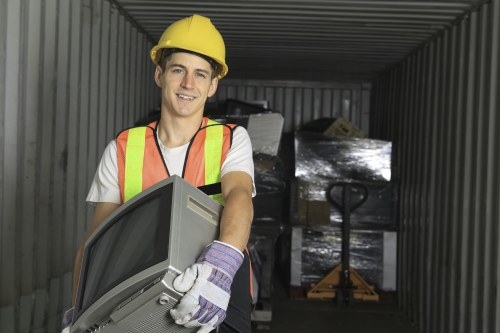 Our logistics model for house clearance services prioritises consolidation: loads from multiple clearances are consolidated at transfer stations, which reduces vehicle movements and improves transport emissions per tonne of material handled. We also record and track tonnage and destination by material category so we can report on recycling rates, reuse volumes and greenhouse gas savings. This transparent tracking helps our clients see the environmental impact of a clearance and supports borough recycling targets.
We run trained sorting crews that separate salvageable items on-site and at transfer hubs. Specialist recycling activity includes timber processing for reuse or biomass, metals sorted for scrap processors, glass and ceramics separated for appropriate recycling streams, and careful handling of hazardous wastes such as asbestos-safe removal and electrical waste. These steps reflect the practical realities of local waste separation policies and the varied waste streams we encounter across different boroughs.
Low-Carbon Vans and Sustainable Fleet Operations
Our house clearance experts fleet includes low-carbon electric vans and efficient Euro-standard hybrids designed to deliver clearance jobs with minimal emissions. Route optimisation software reduces empty miles, and our scheduling clusters jobs geographically to minimise travel time. Investing in low-emission vehicles is one of the most effective ways we reduce the carbon footprint of each clearance, and our commitment to a greener fleet is ongoing as new electric vehicle models become available.
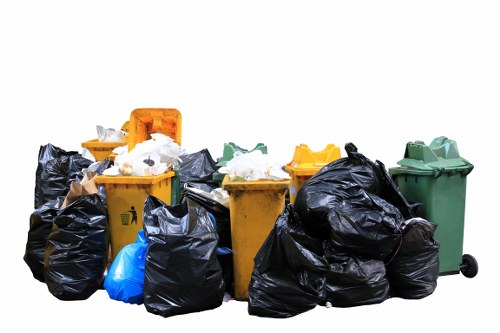 In addition to low-carbon vans, we use packaging reduction and secure, reusable crates for fragile items to avoid single-use materials. Where disposables are necessary we choose recycled or recyclable alternatives. Our teams also carry toolkit kits for minor repairs so that items can be reused rather than discarded for cosmetic defects, increasing the proportion of goods that find a second life through our charity partners or resale channels.
![A close-up image showing a collection of discarded electronic and power supply adapters, including various plug types and cable connectors with different colours such as white, black, yellow, red, and gray. The adapters are piled together, displaying their metal prongs, plastic casings, and cable outlets. The scene appears to be taken outdoors on a paved surface or driveway, with a focus on waste items suitable for professional rubbish removal services, such as those offered by House Clearance Experts in the UK. The cluttered arrangement highlights the assortment of materials and textures, from smooth plastic to metal components, and emphasizes the need for proper disposal or recycling of electronic waste, particularly relevant to local waste management and sustainability efforts in the area near [POSTCODE] or [TOWN].](/pub/_photos/rubbish/f1855549904.jpg) Accountability is a cornerstone of our sustainability promise. We publish annual recycling performance figures and aim to improve our recycling percentage target year-on-year. By combining partnerships with charities, responsible transfer station use, specialist recycling activity and a low-carbon vehicle fleet, our house clearance and property clearance services help local authorities and communities meet environmental objectives while delivering efficient, ethical clearances. We are committed to continuing to innovate and collaborate so that clearances become a source of materials and value, not a burden on the environment.
Accountability is a cornerstone of our sustainability promise. We publish annual recycling performance figures and aim to improve our recycling percentage target year-on-year. By combining partnerships with charities, responsible transfer station use, specialist recycling activity and a low-carbon vehicle fleet, our house clearance and property clearance services help local authorities and communities meet environmental objectives while delivering efficient, ethical clearances. We are committed to continuing to innovate and collaborate so that clearances become a source of materials and value, not a burden on the environment.
Summary of key commitments:
- 90% reuse/recycling target (80% interim goal)
- Active partnerships with local charities and specialist recyclers
- Use of approved local transfer stations and civic recycling centres
- Low-carbon electric and hybrid vans with route optimisation
- Transparent tracking and reporting of material flows and emissions
Our pledge: to keep improving the sustainability of every clearance, reducing landfill dependency and maximising the useful life of household goods through reuse, repair and recycling.